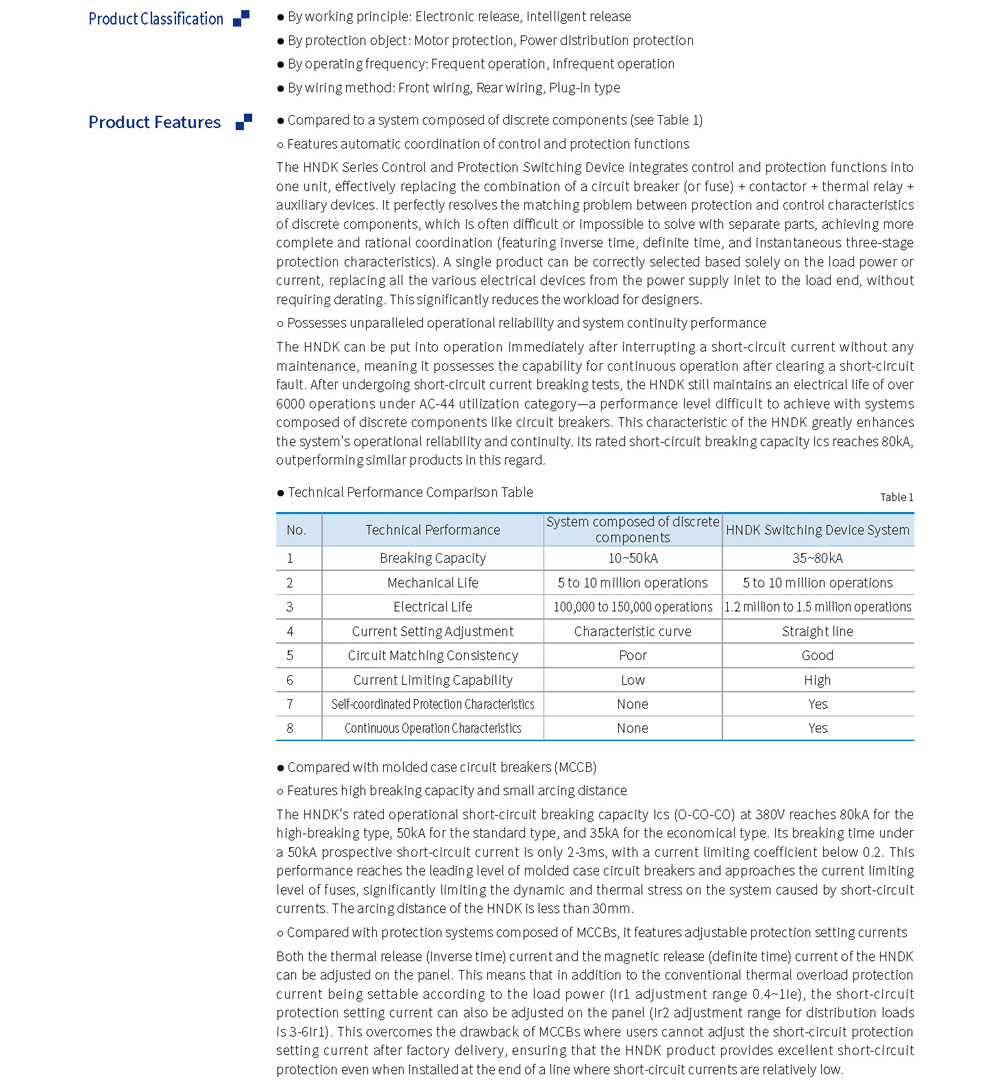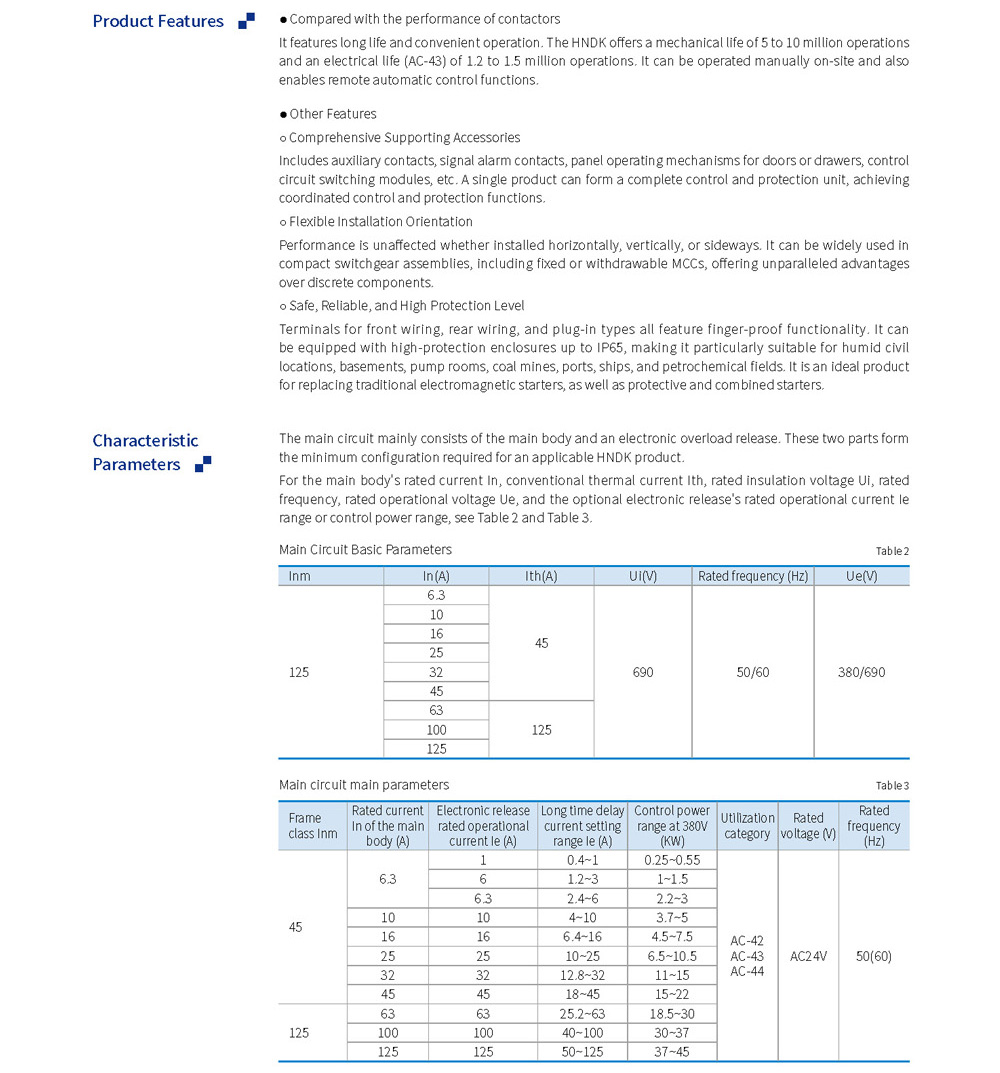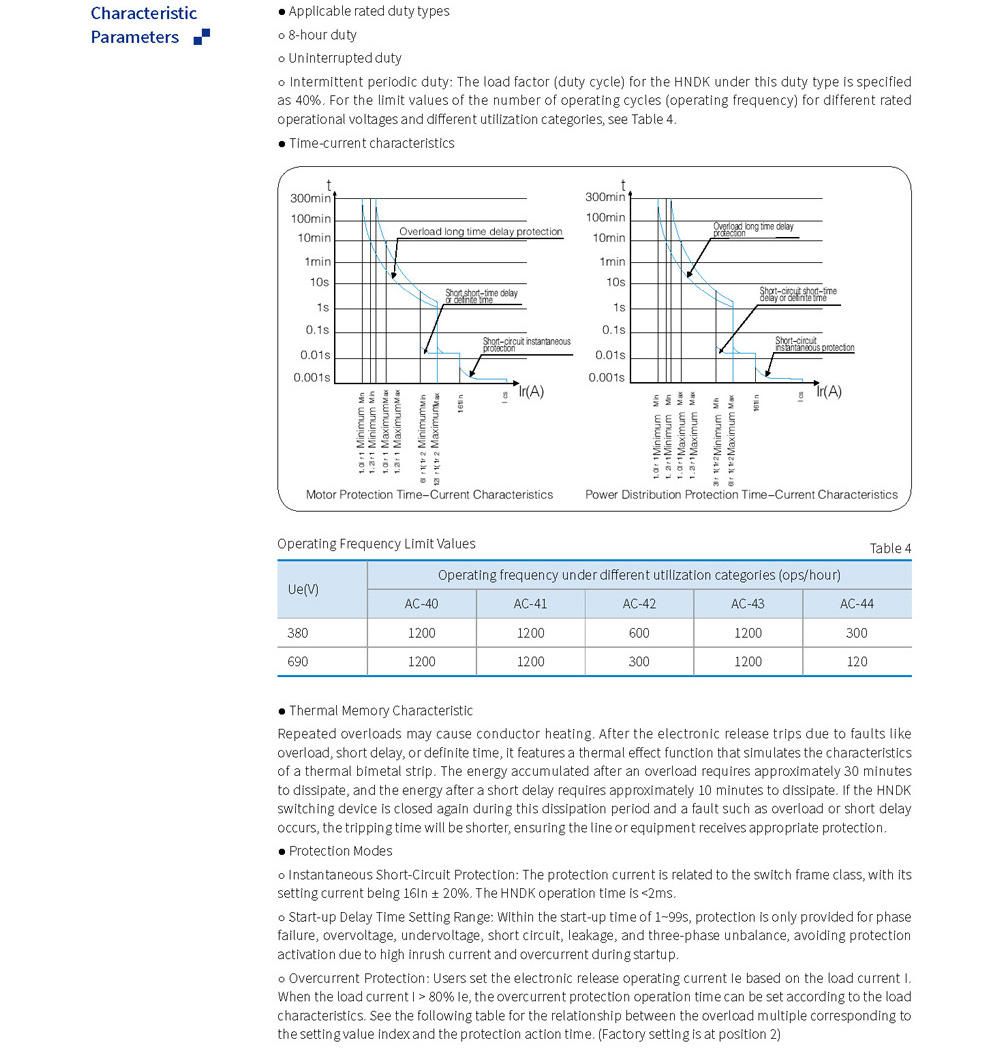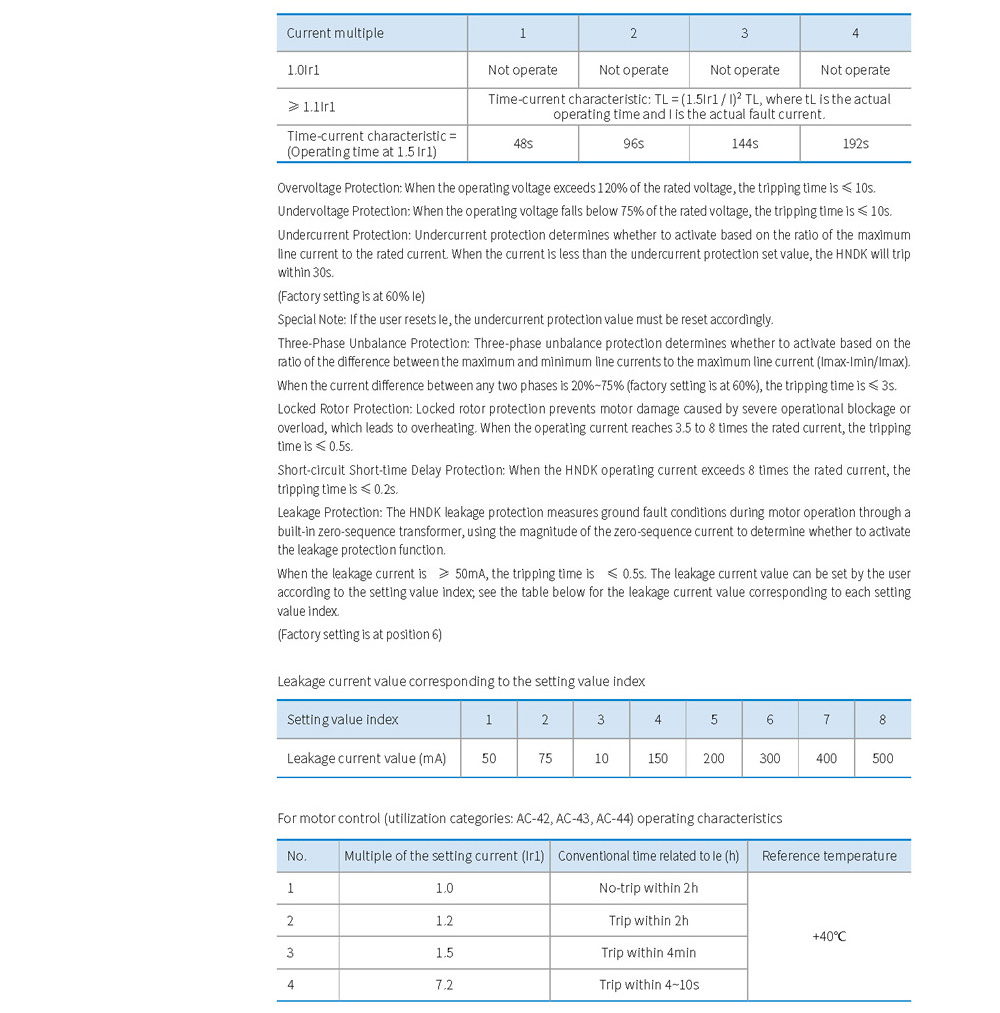

The HNDK series control and protection switchgear achieves integrated and internally coordinated control and protection functions on a single structural product. It can replace various traditional discrete components such as circuit breakers (fuses), contactors, overload (or overcurrent, phase failure) protection relays, starters, and isolators. It features both remote automatic control and local manual control modes for operational control, coordinated time-current protection characteristics, control and protection coordination, continuous operation after a short circuit, high breaking capacity, small arcing distance, and long lifespan. It also boasts adjustable protection setting current, convenient operation, and a diverse range of accessory modules. These advantages enable it to control and protect motor loads and distribution loads.
The emergence of multifunctional electrical appliances has fundamentally solved various problems arising from the unreasonable selection of traditional separate components (usually circuit breakers or fuses + contactors + overload relays), which led to unreasonable coordination between control and protection. In particular, it has overcome the phenomenon of incoordination between protection characteristics and control characteristics when electrical products with different assessment standards are combined together, greatly improving the operational reliability and continuous operation performance of the control and protection system.
The first generation of HNDK column control and protection switchgear had a relatively large size and employed bimetallic strip technology for protection. Although the second generation addressed the issue of large size, there was no significant breakthrough in protection technology. With the increasing application and deepening of microelectronics technology in the low-voltage electrical industry, HNDK has embarked on the path of high-end product design based on advanced microelectronics technology. It has invested heavily in developing products with international advanced levels, integrating the advantages of discrete components, providing comprehensive functionality and reliable performance, and offering a basic component for the simplification and optimization of low-voltage power distribution and control systems.
HNDK Series Control and protection switch
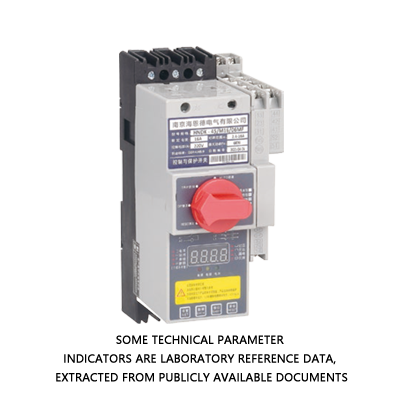
HNDK Series Control and protection switch